
About me
In the following sections, I would like to tell you a little about my career and background.
Childhood and youth

Education
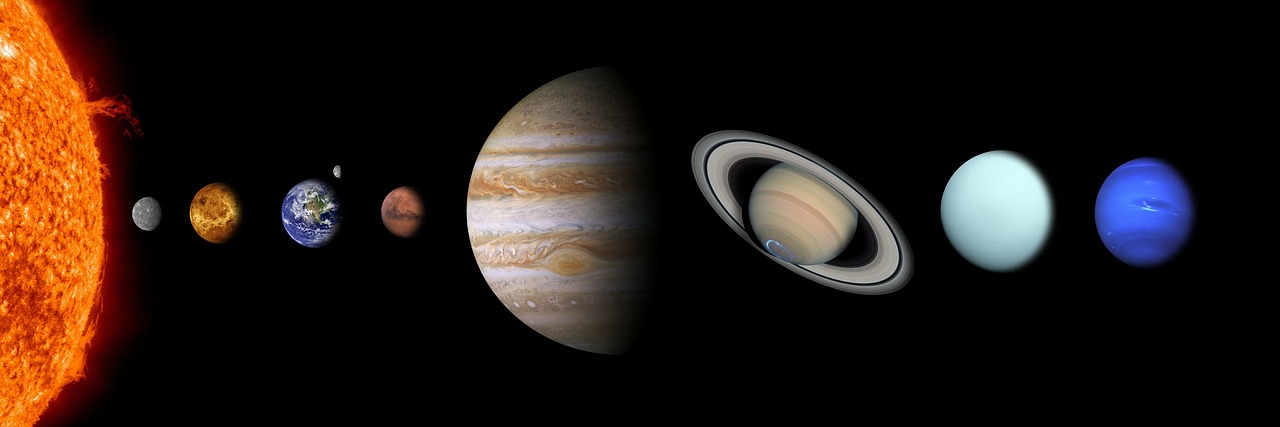
Torn between the various natural sciences, I was extremely unsure after graduating from German Gymnasium whether I should study mathematics, physics, or astronomy. Ultimately, I decided to first train as a mathematical-technical assistant at Bayer AG in Leverkusen.
It was not until the mid-1980s that I stumbled upon the FernUni Hagen and began studying Computer Sciences alongside my job, initially with a minor in Electrical Engineering. However, I was still interested in Mathematics, because I also had a lot to do with mathematical methods and models in my job. After a long break from my studies due to work commitments, I finally had the opportunity in 1995 to pursue my enthusiasm for numbers and equations more intensively in my studies. The new examination regulations allowed me to change my minor subject at the beginning of my main studies.
In the fall of 2002, I graduated with honors in Computer Sciences and received the sponsorship award from the Society of Friends of the Fernuniversität at the Dies Academicus 20031.

Originally, I had planned to pursue a doctorate in Computer Sciences after completing my degree. However, it quickly became apparent that this would be difficult to manage alongside my job, so I ultimately decided to pursue my passion for Mathematics instead. Since I had already taken additional mathematics courses during my computer science studies out of interest, and my completed computer science degree could be credited as a minor in the mathematics program, the workload for the mathematics program was significantly reduced to about two-thirds of the regular curriculum.
In October 2007, I also completed my Mathematics degree with honors. And this time, too, I received the sponsorship award from the Society of Friends of the FernUniversität at the Dies Academicus 20082.
Details about my studies at the FernUniversität Hagen can be found here.
In summary:
-
German Gymnasium, offering the Abitur, 1965-1973
Hölderlin-Gymnasium, Köln
German Abitur (university entrance qualification) -
Training as a Mathematical-Technical assistant, 1974–1977
Bayer AG, Leverkusen
Chamber of Industry and Commerce (IHK) examination -
Study of Computer Sciences, 1995-2002
FernUniversität in Hagen
Diploma II Computer Sciences (equivalent to a Master’s degree) -
Study of Mathematics, 2002-2007
FernUniversität in Hagen
Diploma II Mathematics (equivalent to a Master’s degree)
Professional experience
During my long career at Bayer AG, I worked in various departments and areas, but more or less all of my work involved applied mathematics and applied physics to solve a wide variety of technical problems using mathematical methods and models — interrupted only by a few interludes in the operating system group (mainframe operation) and systems biology (working on pharmacological issues).
Fields of activity 1973 - 1985
-
Projects
- NMR spectrum acquisition and evaluation
- Route planning and optimization for truck transport (goods delivery)
- Simulation of gas dispersion in the event of accidents (3D)
- Evaluation of climate data from greenhouses for plant protection division
- Automated creation of paper prints from color negative films
(device control for exposure measurement, calculation of exposure parameters, optimization through analysis of image content) - Optimization of winding geometries for the fiber division
- Evaluation of beaker centrifuge tests
-
Responsibilities in the operating system group
- Operating IBM mainframe computers
- Operating system-related programming
- Billing system for computer services
- Computer-to-computer communication (IBM – DEC)
-
Trainer for mathematical-technical assistants (from 1978)
Courses in “Introduction to IT”, “Fortran programming”, and “Algorithms and data structures”
Fields of activity 1986 - 1997
-
Projects
- Evaluation of pharmacokinetic time series
- Residence time distributions (measurement data acquisition, evaluation, graphical output)
- Determination of correction coefficients for dyes
- Database programming for a document information system
- Evaluation of environmental measurement data
- Programming of simulation and optimization procedures for copolymerization, homopolymerization, and dynamic granulation
- Design of ion exchange plants (since 1988)
-
Trainer for mathematical-technical assistants (until 1994)
Courses in “Fortran programming”, and “Algorithms and data structures”
Fields of activity 1997 - 1999
- Biological Activity Structure Information System
- Electronic Technical Library on the intranet
Fields of activity 1999 – 2009
-
Projects
- Process Engineering Data Warehouse (data modeling, conversion from Access to Oracle, etc.)
- Thermography evaluation on rotary kilns
- Data mining with K.wiz
- Design of ion exchange plants
- Computing core for a tool for segmented tool cooling
- Corrosion prediction tool (database programming, data acquisition)
-
Intranet applications
- Value management (data modeling, application programming)
- Intelligent data sheets on the intranet
- Material database on the intranet
- Process engineering simulations on the intranet (design and implementation of an infrastructure)
Fields of activity 2010 – 2019
- Development of the LewaPlus software for Lanxess for the design of ion exchange (IX) and reverse osmosis (RO) plants in the water treatment industry
- Projects in the field “Design of Experiments”
Open Source projects
-
wxSQLite3, GitHub (since 2005)
SQLite3 database wrapper for wxWidgets applications (including encryption extension) -
wxPdfDocument, GitHub (since 2005)
Generation of PDF documents from wxWidgets applications -
wxChartDir, GitHub (since 2018)
Support for using the ChartDirector charting library in wxWidgets applications -
SQLite3 Multiple Ciphers GitHub (since 2020)
SQLite3 encryption extension with support for multiple ciphers -
sqlite3mc Conan package (since 2024)
Recipe for SQLite3 Multiple Ciphers for the Conan package manager -
apsw-sqlite3mc, GitHub (since 2024)
Another Python SQLite wrapper (APSW) bundled with SQLite3 Multiple Ciphers -
Contribution to localization support (I18N) in wxWidgets (class
wxUILocale) (since 2023)
Volunteer activities
In addition to my career and family, I have taken on various volunteer roles over the years:
-
Member of the Chamber of Industry and Commerce Examination Board (IHK) for Mathematical-Technical Assistants, 1989-1994
IHK Köln -
Member of the Consistory, 1990-1998
Finnish Community Cologne -
Member of the Presbytery responsible for Finances, 1995-2000
Ev. Kirchengemeinde Köln-Stammheim -
IT support for the ecumenical church café Lichtblick - Café + mehr, since 1996
Ev. Brückenschlaggemeinde Köln-Flittard / Stammheim
In particular, I am responsible for- Technical support for the homepage,
- Development and maintenance of the cash register software, until 2020
Publications
Scientific publications
While my older brother, Helmut H. Telle, professor of laser physics (LinkedIn) was studying Physics, I assisted him in developing computer programs. As part of this collaboration, we published several scientific articles:
-
H.H. Telle, U. Telle: A Simple Numerical Treatment of the RKR Potential Integrals and Its Application to
in: Journal of Molecular Spectroscopy, Volume 85, Issue 1, January 1981, Pages 248-252 -
H.H. Telle, U. Telle: FCFRKR - a procedure to evaluate Franck-Condon type integrals for diatomic molecules,
in: Computer Physics Communications, Volume 28, Issue 1, November 1982, Pages 1-25
The program package FCFRKR is concerned with the construction of RKR potentials and the solution of the Schrödinger equation for the nuclear motion of diatomic molecules (vibrational-rota- tional wave functions). Also included: The calculation of overlap integrals, Franck-Condon factors, dipole matrix elements and Einstein A-factors, r-centroids and the determination of distortion constants ( and ). -
H.H. Telle, U. Telle: Comments on the program FCFRKR,
in: Computer Physics Communications, Volume 36, Issue 1, March 1985, Pages 109-112
Recent experiences with the program package FCFRKR for the evaluation of wave functions and Franck-Condon type integrals for diatomic molecules are discussed. Some minor modifications for the convenience of the user are described.
Prof. Güting’s department has published an article on the SECONDO database system, the redesign of which was the focus of my diploma thesis in Computer Sciences:
- Ralf Hartmut Güting, Victor Teixeira de Almeida, Dirk Ansorge, Thomas Behr, Zhiming Ding, Thomas Höse, Frank Hoffmann, Markus Spiekermann, Ulrich Telle:
SECONDO: An Extensible DBMS Platform for Research Prototyping and Teaching
in: ICDE 2005: 1115-1116
My diploma thesis in Mathematics was published in the Seminar Reports Mathematics of the Fernuniversität Hagen 🇩🇪 Available in German only. :
- U. Telle: Löwner-Familien,
in: Seminarberichte Mathematik Band 79, Fernuniversität Hagen, January 2008
As part of my professional activities, I have contributed to the following publications:
-
Coboeken K., Mogk G., Mrziglod Th., Telle U.: Systems for decisions support in industrial use,
in: Computer Aided Chemical Engineering, Volume 21, December 2006
Abstract: In this paper we present some systems for decisions support used in industry for different subjects. In all cases it is important to consider most parameters as uncertain. Therefore these variables are supposed to satisfy a given probability distribution.To ensure authorized users reliable access to consistent information at any time all over the world these tools are realized as web based systems with a central database. -
Eissing T, Kuepfer L, Becker C, Block M, Coboeken K, Gaub T, Goerlitz L, Jaeger J, Loosen R, Ludewig B, Meyer M, Niederalt C, Sevestre M, Siegmund HU, Solodenko J, Thelen K, Telle U, Weiss W, Wendl T, Willmann S, Lippert J.: A computational systems biology software platform for multiscale modeling and simulation: integrating whole-body physiology, disease biology, and molecular reaction networks.
Front Physiol. 2011 Feb 24
Articles in professional computer magazines
From 1987 to 1993, I published various articles in the professional computer magazines Pascal International, Toolbox, and c’t Magazin für Computertechnik - all in German 🇩🇪 Available in German only. :
- U. Telle: Die mathematischen Grundlagen der Numerikprozessoren 8087/80287 (Buchkritik),
in: Pascal International 1/87, S. 91 - U. Telle: Externe Kommandos in Turbo Pascal,
in: Pascal International 4/87, S. 72-79 - U. Telle: 5 Fortran-Compiler im Vergleich,
in: Pascal International 10/87, S. 23-33 - U. Telle: Fortran erobert den PC,
in: Pascal International 4/88, S. 8 - U. Telle: Prospero Fortran 77 v. 1.2,
in: Pascal International 4/88, S. 18-19 - U. Telle: Oregon Pascal-2 für MS-DOS,
in: Pascal International> 8-9/88, S. 24-26 - U. Telle: Meridian AdaVantage v. 2.0,
in: Toolbox 10-11/88, S. 29-31 - A. Spalka, U. Telle: Pentagons Wunderkind Ada,
in: c’t magazin 11/88, S. 54-61 - U. Telle: Plädoyer für Ada,
in: c’t magazin 1/89, S. 56 - A. Spalka, U. Telle: Ada unter DOS - was taugt’s? Janus versus Meridian,
in: c’t magazin 12/89 1/89, S. 90-97 - U. Telle: Janus Ada v. 2.0.2 - Jetzt der volle Standard,
in: Toolbox 3/89, S. 26-29 - U. Telle: H.A.I.-Tech - Hochsprachen Assembler Interface für MS-DOS,
in: Toolbox 8/89, S. 12-13 - U. Telle: Wem die Mikrosekunde schlägt (Zeitmessung mit Turbo Pascal),
in: Toolbox 8/89, S. 80-83 - U. Telle: Quickstep Tools - Mit schnellen Schritten zum Erfolg?,
in: Toolbox 11/89, S. 12-14 - U. Telle: Fortschritte - 3 Fortran-Compiler für den PC,
in: c’t magazin 10/90, S. 232-248 - U. Telle: Prospero Pascal: Portabilität hat ihren Preis,
in: Toolbox 3/91, S. 10-12 - U. Telle: Schrei der Katze - SQL-Datenbank Ocelot 2.13,
in: c’t magazin 12/92, S. 180-185 - U. Telle: Fortran lebt auf, Erster Deutscher Fortran-90-Kongress in Köln,
in: c’t magazin 2/93, S. 26 - U. Telle: Der neue Standard - Fortran 90 etabliert sich als Programmiersprache,
in: c’t magazin 2/93, S. 114-123
Other publications
- wxChartDir - Using ChartDirector in wxWidgets applications
Article for the wxWidgets-Developer-Blog in August 2018
Languages
| Language | Level |
|---|---|
| German | Native language |
| English | Business fluent |
| Finnish | Good command |
| French | Basic knowledge |
-
Report on page 1 in FernUni Perspektive Nr. 3, provided by ULB Münster ↩︎
-
Report on page 1 in FernUni Perspektive Nr. 26, provided by ULB Münster ↩︎